In Oshawa, the 2020 National Building Code of Canada (NBCC) requires that any foundation design on soils with potential groundwater fluctuation undergo a site-specific hydrogeological investigation. With the city's expansion along the Lake Ontario shoreline and north toward the Oak Ridges Moraine, we see everything from dense Halton Till to fractured limestone. The field permeability test, either Lefranc in soil or Lugeon in rock, delivers the hydraulic conductivity value that numerical models demand. Without it, you are guessing on dewatering rates. The local conservation authority often conditions permits on this data, especially within the Oshawa Creek watershed. Our team runs these tests in tandem with SPT drilling to correlate permeability with stratigraphy from a single borehole, saving time on site.
A one-meter difference in the groundwater table can double the lateral earth pressure on a retaining wall. We measure permeability to predict that.
Our approach and scope
Local ground factors
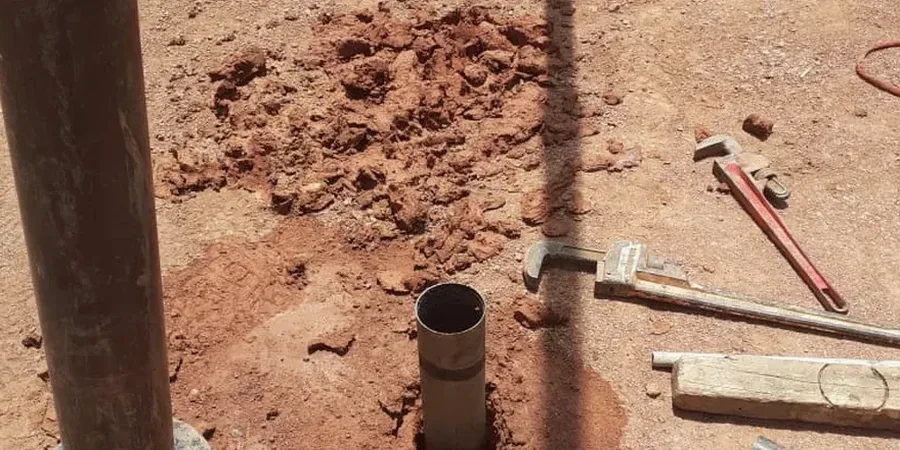
We run the test with a twin-packer system for Lugeon work, isolating the injection zone between two inflatable seals. The gauge reads pressure in psi, and the flowmeter ticks off liters per minute. If the ground is fractured, you see the flow jump the moment the packers seal. A common mistake in Oshawa is running the test in an uncased borehole through the overburden. The till collapses, the interval gets smeared, and the k value drops by an order of magnitude. We case through the soil and socket into competent rock before testing. That extra step prevents a misleadingly tight reading that could lead to a flooded excavation later.
Regulatory framework
NBCC 2020 (National Building Code of Canada), CSA A23.3:19 (Design of Concrete Structures), ASTM D6391-11 (Field Permeability by Borehole Tests), MTO Laboratory Testing Manual (applicable methods)
Other technical services
Lefranc Variable/Constant Head Test
We measure hydraulic conductivity in soil using both falling and constant head configurations. The setup includes a slotted standpipe and a graduated water reservoir. Data is reduced on-site using Hvorslev's shape factor for the intake zone geometry.
Lugeon Packer Testing in Bedrock
We perform staged pressure tests in NQ-size boreholes using pneumatic packers. Five pressure steps per stage, ascending and descending, to detect fracture dilation or infilling erosion. Lugeon values are reported alongside flow versus pressure plots.
Dewatering Feasibility Assessment
Using the permeability data, we estimate steady-state inflow rates for excavation dewatering. We factor in seasonal recharge, especially during spring snowmelt when Oshawa Creek levels peak, to size pumps and sumps correctly.
Typical parameters
Common questions
When does the Oshawa building department require a field permeability test?
Typically when the proposed foundation is within the zone of influence of a watercourse or when a deep excavation extends more than 1.5 m below the seasonal high groundwater table. The Central Lake Ontario Conservation Authority (CLOCA) may also request it for projects near regulated areas.
What is the difference between a Lefranc test and a Lugeon test?
The Lefranc test measures hydraulic conductivity in granular soils or weak rock using a simple open borehole section, without packers. The Lugeon test uses inflatable packers to isolate a specific interval in competent rock, applying staged pressures to evaluate fracture flow. We select the method based on whether the target unit is soil or rock.
How long does a field permeability test take on site?
A single Lefranc test at constant head takes about 45 to 90 minutes once the test depth is reached. A Lugeon test with five pressure stages runs approximately two hours per interval. The total time depends on how many intervals we test in one borehole.
What is the typical cost for a field permeability test in the Durham Region?
For a standard Lefranc or Lugeon test program in Oshawa, the investment ranges from CA$780 to CA$1,480. The final figure depends on the number of test intervals, depth of the borehole, and the time required for packer deployment.
Can you use the same borehole for permeability testing and soil sampling?
Yes. We typically drill the borehole first, log the stratigraphy, and collect undisturbed samples for laboratory triaxial testing if needed. Then we set up the Lefranc or Lugeon test in the same hole before backfilling, which keeps the investigation efficient.